By: Mark Abrams
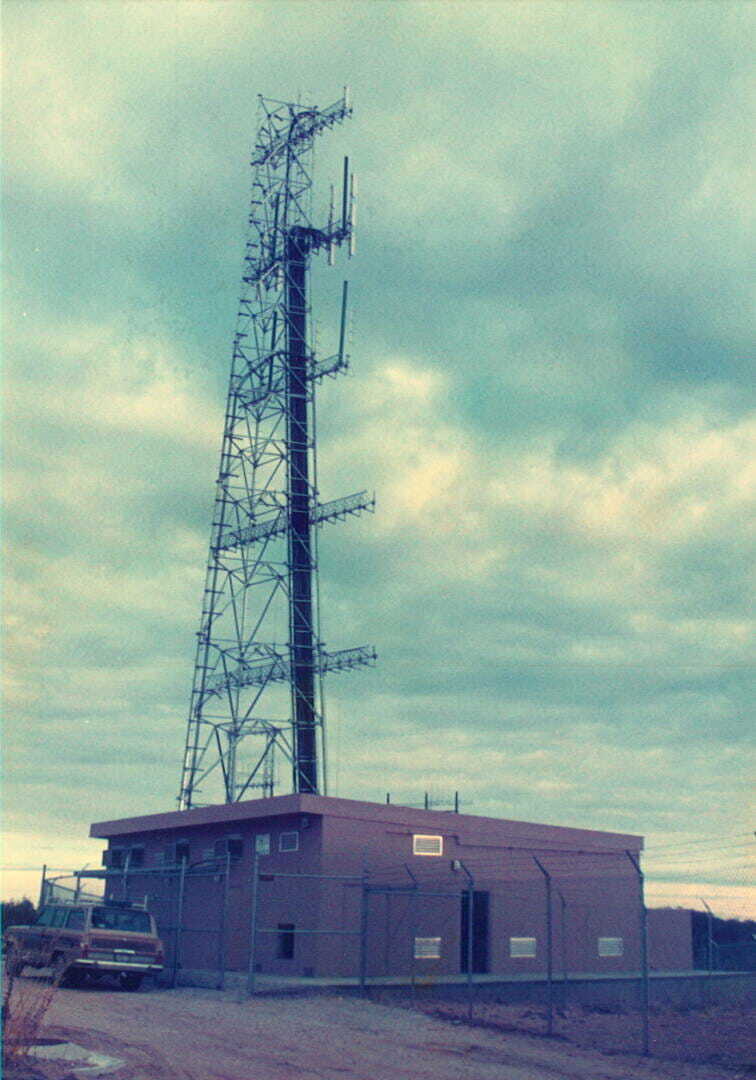
The project of building our flagship tower site at Mt Lukens started a long time ago in a galaxy far-far away. It was 1982-1983 when we first identified the need to have our own building. We were operating repeaters at Mt Lukens starting in the late 1970s in the Mobile Communications Service building. The site was not a bad building from the amenity standpoint, but was not an especially good building either.
We had approximately 4 repeaters at Mt Lukens. This is hardly a sufficient number of repeaters to justify building our own facility. We installed these repeaters starting in late 1977 and slowly added the additional repeaters over time. Eventually we had all four repeaters operating. Unfortunately, we were in competition with the building owner in the radio sales and service business, so we knew that eventually this was going to reach a boiling point. We looked at moving our repeaters to another facility at Mt Lukens and had established a relationship with another building owner in case we needed to pull the trigger to move our equipment. Eventually, we got to that point where we needed to execute the move so we signed an agreement with the other building owner and proceeded to move our equipment.
We stayed in this newer facility for several years while we continued to build up the amount of equipment that we had at the site. We were up to over 30 repeaters at Mt Lukens and continued to grow our business there to the point that it was obvious that we needed our own facility. We had been working on the plans for our new facility for several years in the background while we were conducting normal business. The US Forest Service who owns the property had a moratorium on building new facilities going back to the 1970s while they were working on their new site management plan which was intended to analyze the present and future need for communications at the site. The new management plan & report identified where the existing facilities were located, what they liked, what they disliked, what needed to be upgraded and who was going to pay for the upgrades. The management plan also identified potential locations for new facilities for two way radio and for microwave communications.
MRA took the finished report which came out in 1982 and immediately embarked on the project of obtaining a permit. There were many obstacles to this process including the need to participate in the cost sharing of the new underground power system that was going to be installed at the site. The existing overhead power lines were causing issues with the ability to place buildings and towers on the mountain and created reliability problems in adverse weather. All of the existing building owners needed to contribute to the cost of building the new power system (the US Forest Service did not pay for anything) and new building owners had to contribute a prorated amount depending upon when the new facility was built and energized.
There were multiple obstacles to getting a permit which included those from the US Forest Service and some from the County of Los Angeles where the site was located. A portion of the peak is within the city limits of the City of Los Angeles which would subject any construction in that portion of the mountain to obstacles from the City of Los Angeles. Fortunately, the location that we proposed was within Los Angeles County who is easier to handle than Los Angeles City. The first obstacle was obtaining a registered professional engineer to design the building. There were some existing building foundations that were built by MCI in the 1970s which were abandoned by them. They were building a new microwave network from Los Angeles to San Francisco when they made a deal with another company that already had an existing network with those facilities, so they stopped construction in the middle of the job and walked away. At Mt Lukens, they had planned to use a prefabricated building on a concrete pad with a 100’ tower to hold the microwave dishes. They had built the concrete pad for the building and the tower foundations for the tower at Mt Lukens and then abandoned the project. So when we identified that location for our project, we “inherited” the existing improvements to our gain or our detriment, however it would ultimately turn out. My goal was to make use of the improvements to save us considerable money building the project, but that turned out to be wrought with problems.
I worked every angle to keep the price down for designing the building and obtaining the permits. This included coordinating between the different “experts” that needed to be involved, running paperwork to the US Forest Service and to LA County. We hired an engineer to design the building who never left his office. Any time he needed a question answered, I performed the research, went to the tower site, called the County engineer, contacted the US Forest Service to get the clarification that was needed. I took the measurements of the concrete pad and the foundations and essentially performed the tasks of the surveyor to avoid the costs of sending a surveyor to the site.
Another task that I performed was to research the engineering from MCI for the tower foundations and the concrete pad. I made literally over one hundred calls to MCI and their engineering firms attempting to find out anything that I could get on the existing improvements. If I could get the information, we could potentially make a case for reusing the improvement. If we were unable to get the information, it looked like we would have to remove the improvements at our expense and start over which would cost us a considerable amount of additional money. I spoke to multiple people at MCI and their engineering firm. Eventually, I found the actual engineer that designed the project. He was very helpful, but we spent a considerable amount of time trying to identify the Mt Lukens site. They had the project filed under the city name of La Crescenta while I kept insisting it was called Mt Lukens. I offered a city name of La Canada / Flintridge which is the nearest city, but they could not find the project under that name.
The project engineer sent me a set of plans showing the engineering for the different towers and buildings within the entire project network. This consisted of many of pages of blue prints which had multiple sizes and dimensions for the different sites within the network. What I was missing was the “master” pages that showed the specifics of the tower site along with the engineering calculations that supported the specific dimensions that were selected for the project. It took six months to eventually identify the plans which were filed under La Crescenta, but once they were found, they sent me a copy of the pages which provided the glue that held everything together from an engineering standpoint. I then submitted these plans to our engineer who had to determine if he could reuse the improvements. He was able to address the use of the existing concrete pad, but he could not address the issue of the tower foundations which had to be evaluated by the tower company. So I sent the plans to the tower company for their evaluation. They in turn decided that they needed a soils evaluation which required sending a drilling rig to Mt Lukens to take a core sample to look at the ground compaction and the specifics of the material that made up the soil to determine its ability to withstand the pressures that would be exerted on the foundations.
We managed to get the results of the different facets of the engineering one at a time. First, the architect / engineer for the building decided that the concrete pad was sufficiently strong that it could support the concrete block building, so we could reuse the concrete pad. Then we heard from the tower company that the concrete foundations contained sufficient strength to support our 120’ tower, even though the original tower design called for a 100’ tower. As it turned out, the standard for engineering was to have a 2:1 safety factor in the design, but MCI had designed the tower foundations for a 3:1 safety factor. When you took into account the fact that our tower was taller than the original design, we still had greater than a 2:1 safety margin in the design. However, this did not account for whether or not the foundations would continue to stay in the ground. After waiting for the soils company to provide their report, we found out that the soil was strong enough to keep the tower foundations from pulling out of the ground.
Finally, we thought that we were in the clear, but that did not last. As we proceeded through the processes, we submitted the plans to the US Forest Service for their approval. They took about 30 days to review the plans and determined that the plans were acceptable. However, they still required us to go to LA County building department to get the building plans checked for structural integrity. Upon arriving at LA County, the building department decided that we had to pass plan check from the planning department to determine if we would be allowed to build the tower and if it complied with their laws. I informed them that the US Forest Service had approved the plans and since it was on federal land, they were exempt from LA County planning department. They disagreed with me and claimed authority over the planning portion of the project and flatly refused to perform a plan check for safety until after it went through LA County planning. I left their office with my tail between my legs and had to think about how to handle the situation.
I slept on the problem and decided I had to contact the US Forest Service to see what could be done. So I took the plans to their office in San Fernando and they informed me that they were exempt from local regulation which is the same thing that I told LA County to no avail. I asked if they could write a letter to LA County regarding the lack of jurisdiction. They said that it would take 90-180 days to get that done so I left there thinking what else could be done. We were trying to move the project along at a faster pace because we were looking at installing significantly more equipment at Mt Lukens and we were already paying a considerable amount of rent which is significant today and was far more significant in 1987 dollars.
After sleeping on my meeting with the US Forest Service, I came up with another idea. I called the US Forest Service and got the local Forest Ranger on the phone instead of speaking to the staff who I had interfaced previously. I told the Forest Supervisor that some local bureaucrat at LA County has decided that he knows better than you how to run your forest. This angered the Forest Supervisor who was now out for blood. I gave him the name and phone number of the person at LA County that gave me the trouble with the building permit and he received a scathing call from the Forest Supervisor who reamed him a new hind end, then stopped being nice about it and continued the reaming until the LA County employee was a worthless pile of mush. I then went back to the LA County offices to resubmit the plans for approval. This time, I received a warm reception with a complete willingness to process my plans.
Out of the woods yet? Of course not! The LA County building department returned the plans for a few minor corrections plus one zinger. They described a disruption zone from the tower foundations that would rise from the bottom of the foundation at a 30 degree angle towards the building that would house the equipment and would apply pressure to the foundations. They wanted to see some engineering to determine that the disruption zone would not disrupt the building. So now the plans went back to the engineer / architect for the minor corrections and the appropriate calculations and proof that the tower foundations would not cause trouble for the building. At last, I thought that we had covered all the bases so then I went to resubmit the plans.
Two weeks went by and finally I received a call from LA County telling me to pick up the plans for additional corrections. I thought that I had covered all the bases, but I headed over to their offices in Arcadia which is not an insignificant drive from our offices. When I reviewed the return, they were telling me to pay a new tax that just went into effect that would provide additional funding for the local school. Mt Lukens is not located with any school district, so I questioned them as to whom I was supposed to pay this tax of $150. It was new to LA County, so they also didn’t know whom to pay. So I got them to agree that I would pay the fee to the La Crescenta School District. So I went back to the office to get a check made out to the school district and then proceeded to drive over there to pay them the fee. When I arrived at the district headquarters, I was bounced around between about 5 different staff members before it was decided who could handle the situation. They were completely taken off guard as no one had ever been there before to pay them this new tax. I had to convince them that I had to pay the tax and I needed a receipt that I had paid them the money. This took awhile to get someone to actually decide to accept the money and write me a receipt.
Now that I was armed with the proof that I paid the school tax, I went back to the Arcadia offices of LA County. I brought the plans with me and insisted that they issue the permit while I stood there for the next 45 minutes. I was proud of myself that I was able to leave their offices with the stamped plans. So now I had to submit the stamped plans to the US Forest Service so that they knew that we had obtained the building permit. After another week, I had a letter from the US Forest Service giving us permission to proceed with the construction.
While this process was going on, I had generated copies of the plans and had circulated the plans to several construction companies to have the plans bid. We had received the bids, evaluated them, met with the contractors to discuss the bids and selected the winning contractor, Gianni and Associates who had built several radio buildings and towers for cellular companies. They were not the low bid as their bid was the middle price, but we had the most confidence in their ability to complete the project in a timely fashion as the cellular companies were not very forgiving about delays in getting their sites online. We had seen their work and felt that they did quality work and the owner was east and flexible.
We still were not quite ready to start. I was simultaneously working with the bank to finance the building. The problem with financing was the fact that we did not receive a lease which is the document that the bank wanted to see. The US Forest Service at that time issued what they called a Special Use Permit. It is essentially the same as a lease but did not contain a few provisions that one would see in a traditional lease and it said “Special Use Permit” instead of “Lease”. This scared the banks and we had a bad time trying to get the bank to finance the project. We had worked with Mid Cities National Bank attempting to finance the building and the loan officer left the bank and landed at Downey National Bank. We moved all of our accounts to Downey National Bank and continued the process which finally resulted in a denial. We did get financing, but it only happened by using our personal real estate as security for the loan instead of the new radio building.
After all of those ordeals, we were finally off and running with the project. These processes took over 5 years to complete from the time that the new underground power had been installed at Mt Lukens which gave us the advantage that we no longer had to retroactively contribute to the new power system costs. So we ordered the radio tower to fit the foundations and we hired Gianni & Associates to start the construction. We had a goal of occupying the building by June 1, 1988 to avoid another month’s rent in the building where our equipment was currently located. We had approximately 25 repeaters to install in the new building and needed to have them on the air in June and we did not want to install them in the old building and then within 30 days have to move them, so we kept looking for ways to get the construction done sooner rather than later.
We started the construction by meeting Jim Gianni (the owner of the construction company) at Mt Lukens to look at the plans at the construction site and go over the details of how to proceed. The first thing that we did was to look at the surface of the concrete in the pad and noted that it had deteriorated and would need to be resurfaced. We then took measurements of the concrete pad and discovered that it was not square which meant that we could not use it without a lot of work. We decided to add one block to each dimension of the building and would dig new foundations around the pad so that the existing pad would become nothing more than fill dirt. We also noted that the ground was level at the pad, but quickly sloped away from the pad which would cause us some difficulty during construction. We also noted that the elevation contours were not on the plans since we did not pay for a surveyor to survey the site prior to the preparation of the plans.
Certain aspects of the construction were left out of the bid to the general contractor. We had hired an air conditioning company to install the central air conditioner for the main room and the wall mount air conditioners for the smaller rooms. The main air conditioner needed a custom frame to raise it off the ground so that it did not get buried in snow or anything else and the wall mount air conditioners had custom made hot dipped galvanized boxes to house and secure the air conditioners. These boxes were designed in such a way that they needed to be installed in the wall as the wall was being built, so they had to be ready once the block was raised to the height that required the air conditioners to be installed. The cable entry boxes were custom made and built for our building by the air conditioning contractor who had the fabrication facilities to make these custom entry boxes. These boxes were exactly two blocks tall and two blocks wide and had five sides which would fit into the block walls and be almost impervious to thieves being able to break into the building through the cable entrances. The electrical contractor was one of our customers whom we hired directly to install the main electrical panel and all of the sub panels. Most of the branch circuits were not included, but lighting and convenience outlets were included in the basic electrical contract.
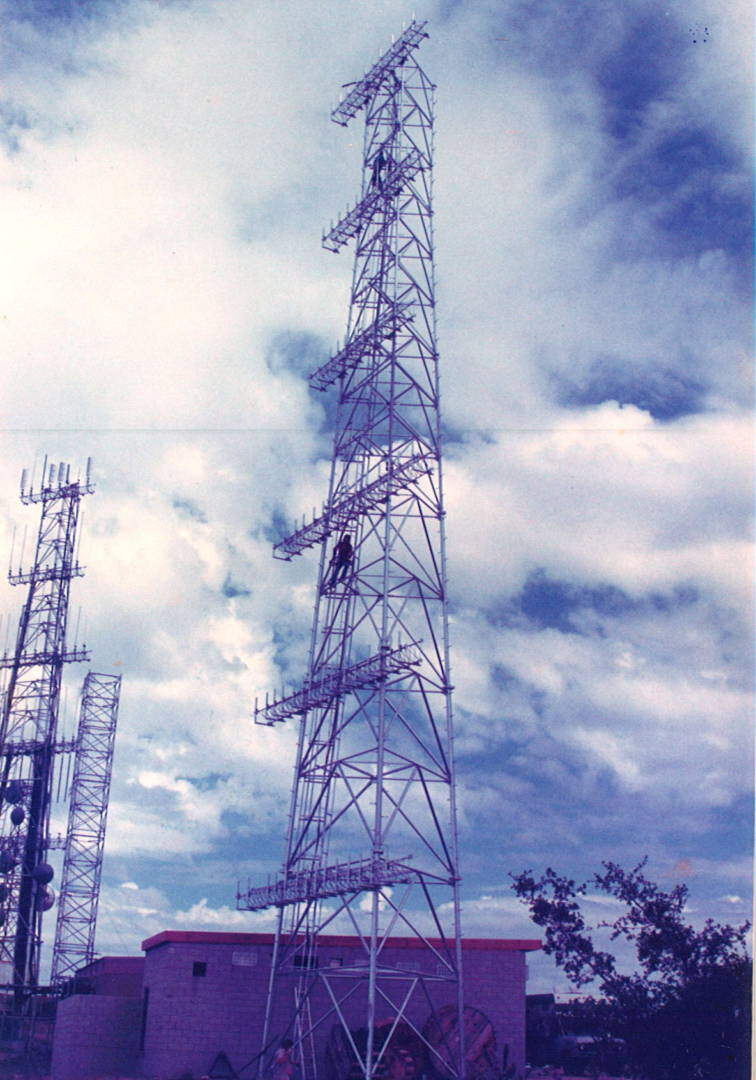
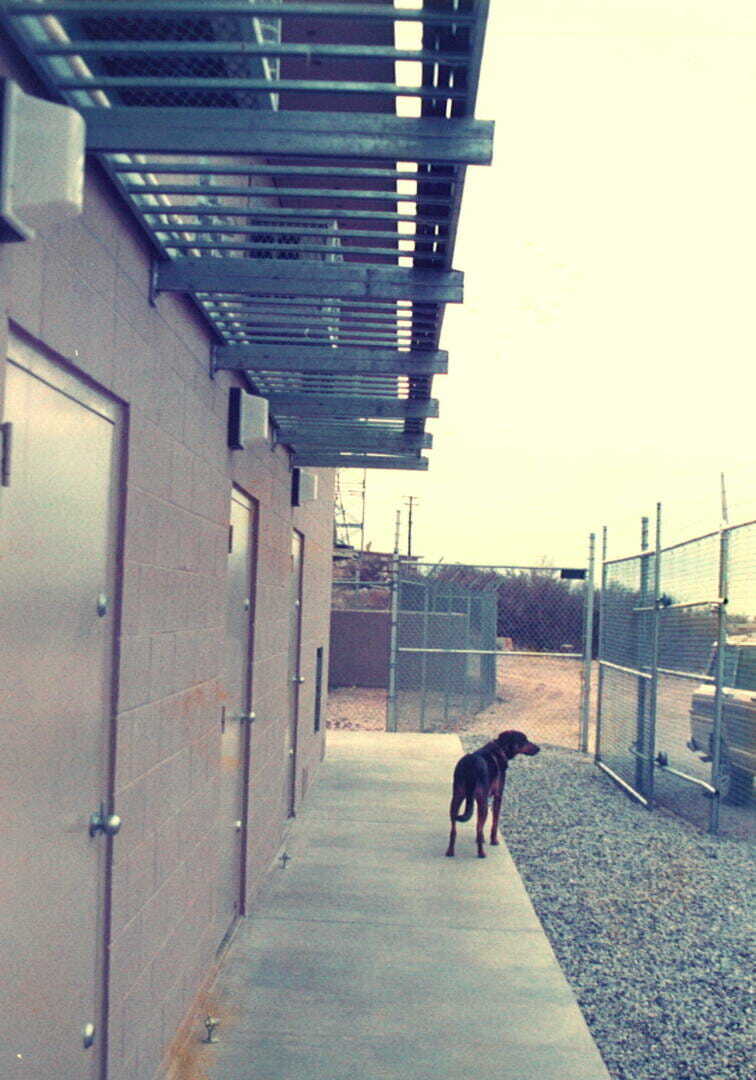
Now it was time to start the actual construction. A backhoe was obtained to dig the foundations for the entire building. Since we were able to reuse the existing tower foundations, we did not have to dig at the tower location. After the foundation was dug, it was time to install the underground conduits to bring in the power from Edison and the telephone cable from General Telephone. We also had to dig the foundations for the propane tanks and the trench for the propane line that goes from the propane tanks to the building. After that was completed, the rebar was installed in the foundation and the electrical contractor showed up to install the U-fer ground for the building. At this time it occurred to me that we had not planned anything for the ground of the building and tower, especially when the digging of the foundation exposed the halo ground that was installed for the concrete pad. So now I was faced with creating a ground system before it was too late. So I purchased a large amount of wire and connectors to create a ground system that would provide a reliable low impedance ground for both the building and tower. I installed the ground system before the concrete trucks showed up to pour the foundation.
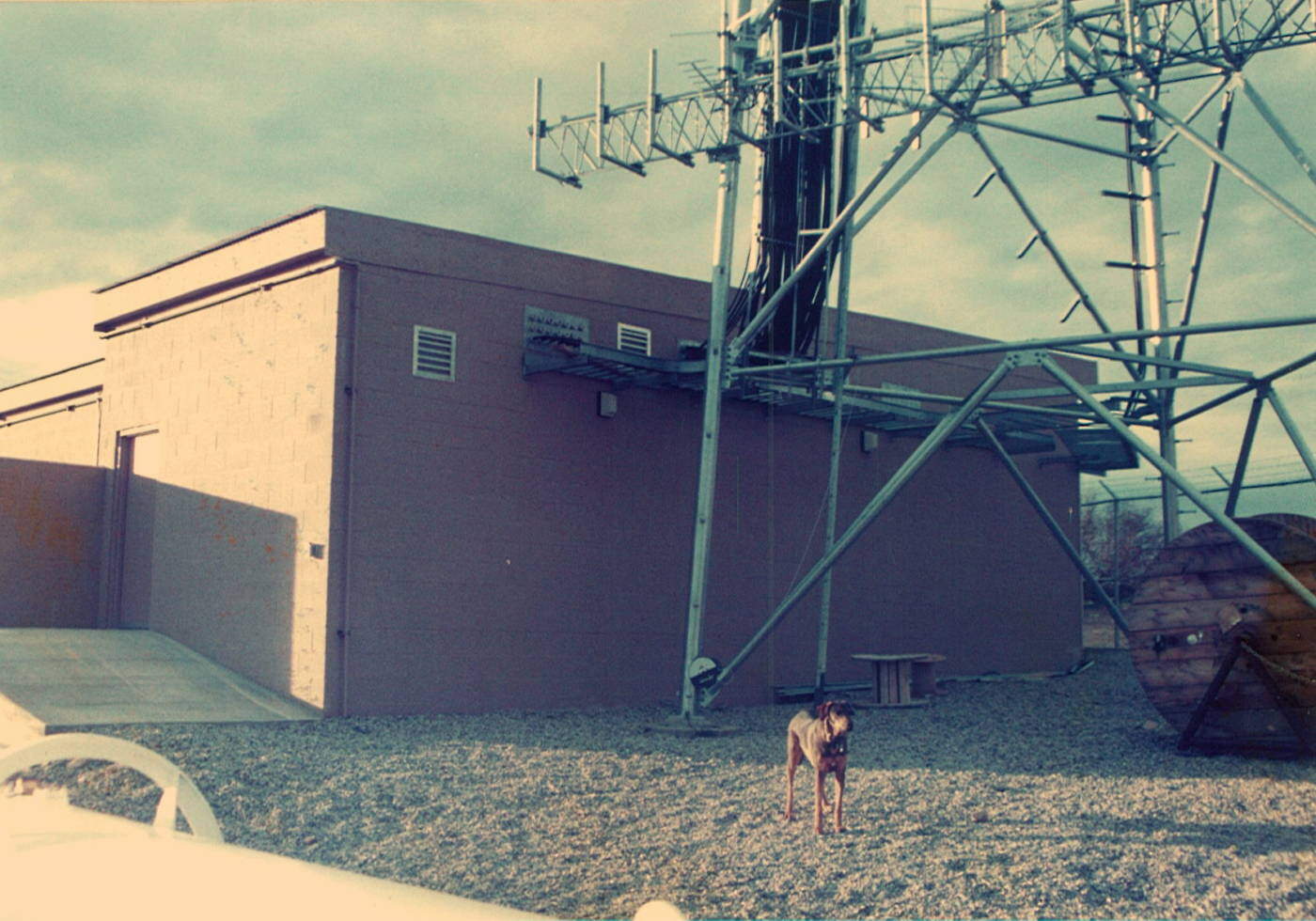
Soon, we were pouring the foundation and unloading a truck of concrete block. The block was used to build the foundation to just above the height of the floor so that the block would act as the forms for the concrete floor. It was now time to place sand on top of the existing concrete pad so that the new concrete did not bond to the old concrete and create a problem in the future. Once that was done, the rebar and screen was installed to secure the concrete pad of the floor so that it would be strong, not crack and not move. We worked with the concrete crew to get the floor level which would make our future job of installing the rack and cable tray much easier. After a few days of drying and hardening to the point where we could drive over the slab, the air conditioning contractor brought the air conditioner up the mountain and drove the massive air conditioner unit across the floor to place the unit into the “patio” area at the rear of the building. If we had not done this, we would have to hire a crane to pick up the air conditioner and transport it over the top of the building because that area would no longer be accessible. The air conditioning contractor had also manufactured the cable entry ports and had the ports hot dipped galvanized. He delivered the ports at the same time that he delivered the main air conditioner to the site so that they could be installed in the walls once we had the block walls ready for them to be installed during the construction.
Once we started building the walls, we noticed that the rear of the building was specified to be built with 6 inch block. Although this was strong enough for the current job, it would be insufficient for a future expansion of the facility which we were anticipating to happen at some point in the future. Therefore we made a decision to upgrade the block from 6 inch to 8 inch. We also decided to upgrade the door to the battery room from a chain link gate to an actual door to reduce the dirt and dust that would enter the room with a chain link gate. As time went on, we saw other items that needed to be upgraded so that the finished product would be a quality building that would last a long time without concern about high maintenance issues.
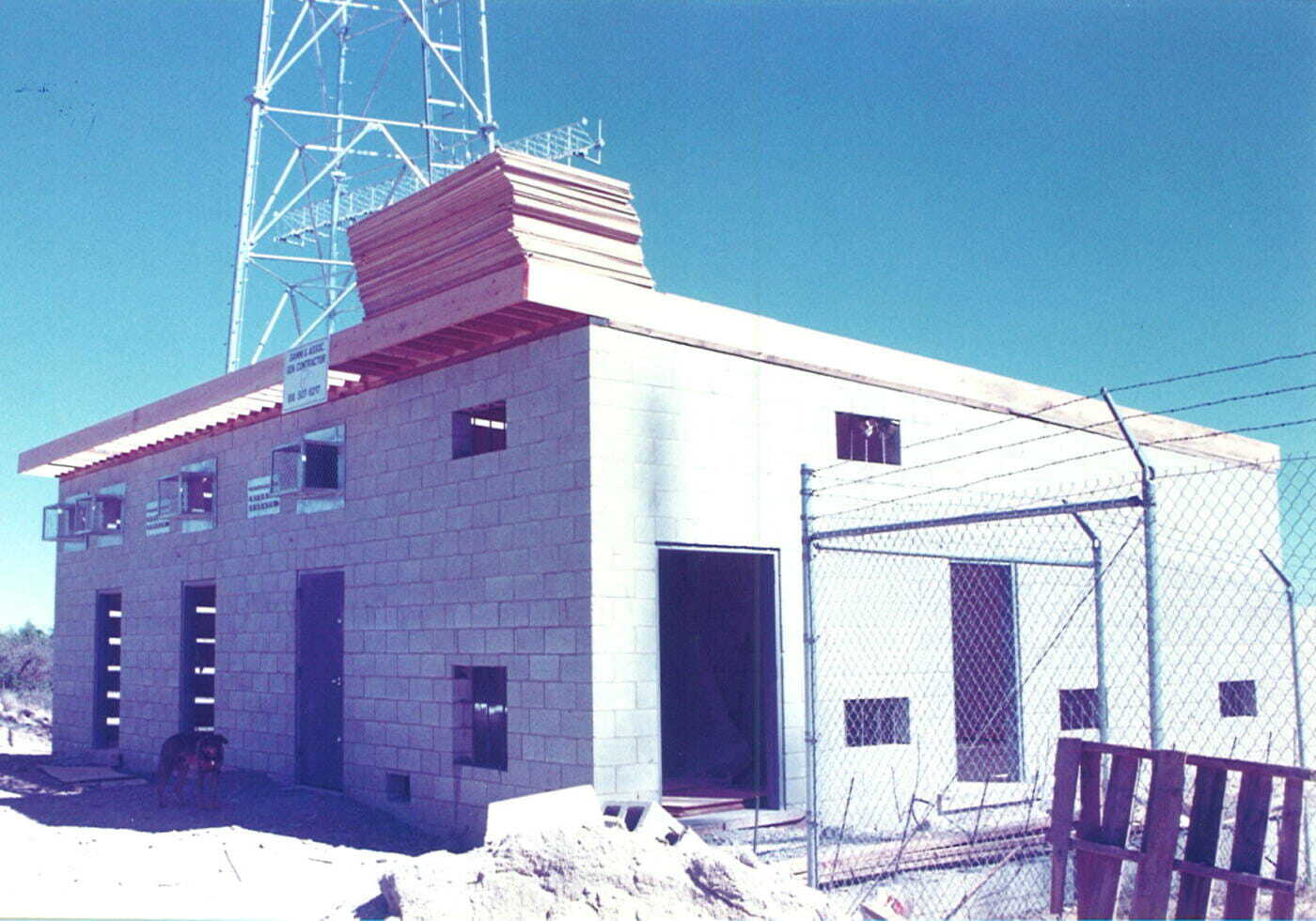
Now that we had the air conditioner in place, it was full speed ahead building the block walls. The normal procedure was to build 4 feet of wall and then call for inspection. However, due to the remoteness of the building, the building department gave permission for us to build 6 feet of wall before calling for inspection. The concrete for the mortar was mixed on site during the process of building up the block walls. However, we needed to pour all the cells of the block which meant that we needed a concrete truck to bring a load to fill the walls. Once that was done, we were ready to call for inspection. The inspectors did not have 4WD vehicles which could navigate the roads to the site, so it was necessary to meet the inspectors at the bottom of the mountain and take them up the hill for the inspection and take them down the hill after inspection was finished. The inspector gave permission for the next lift to be another 6 feet which would complete the walls so we were able to get by with only two inspections on the block walls instead of three inspections that would normally be required.
Now it was time to get delivery of more concrete block. The truck was dispatched to bring the block and we had to meet the truck at the bottom gate to let the truck through the locked gate and escort the truck up the hill to the site. We worked with the truck to get the block unloaded around the building to reduce the amount transport of the block to the place where it was to be used. Once the block was on site, the block workers could start working on the block again working on one row of blocks after another working up the walls to the point where the door frames needed to be installed and the air conditioner security cages for the wall mount air conditioners needed to be installed. As the walls continued to be raised, we got to the point where the holes for the cable entry ports had to be left open for the ports to be installed at a later date. (The holes in the cable entry port had been punched too small so we had to take them down the mountain to have them re-punched which made them unavailable at the time that the block layers were ready to install the entry ports.) The block continued to be raised one row of block at a time until we reached the full height of the wall in the front of the building. Then they went to work raising the height of the block on the south side of the building, the battery room and the patio area. Eventually, the block was up to the full ceiling height.
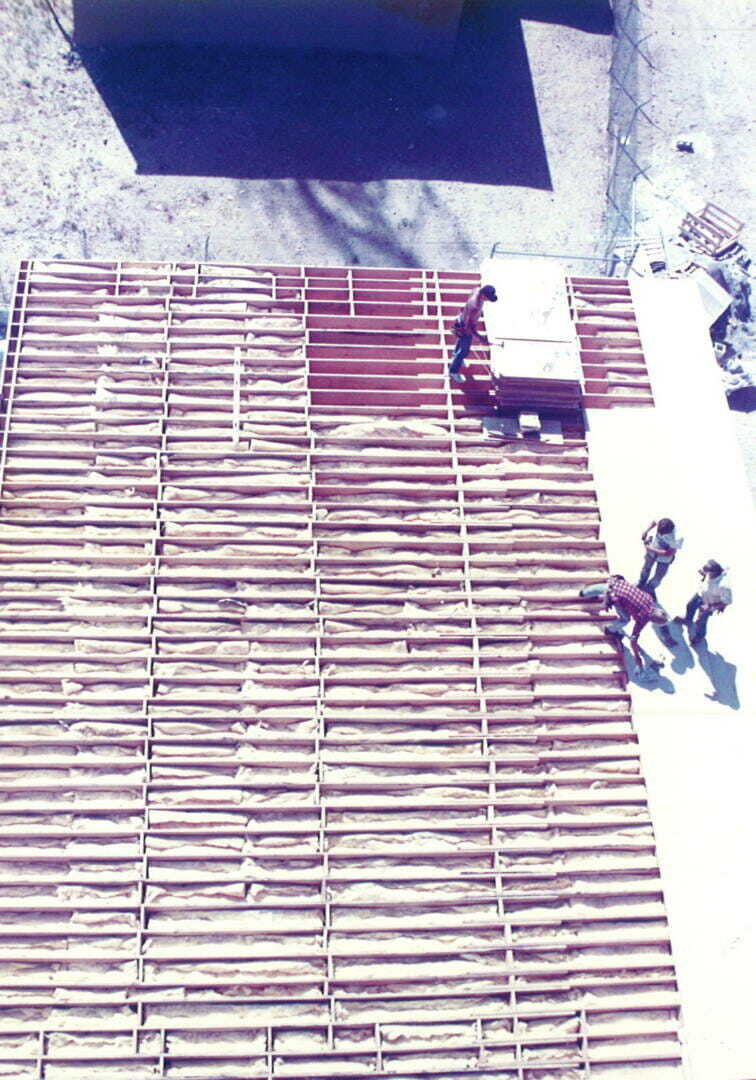
Now it was time to start the roof framing. A truck load of lumber needed navigate the windy and twisty road up to the site and unload the lumber at the site. Extra long roof joists were ordered to span the 20 feet from north to south to provide a ceiling without any center supports. The joists were designed to be on 12 inch centers and blocked every 4 feet which presented challenges for the framers because the 12 inch spacing made it difficult to swing a hammer. So they
While the roof framing was being done, it became apparent that we needed to get the cable port entries installed. The holes punched in the entry port had their size corrected and the
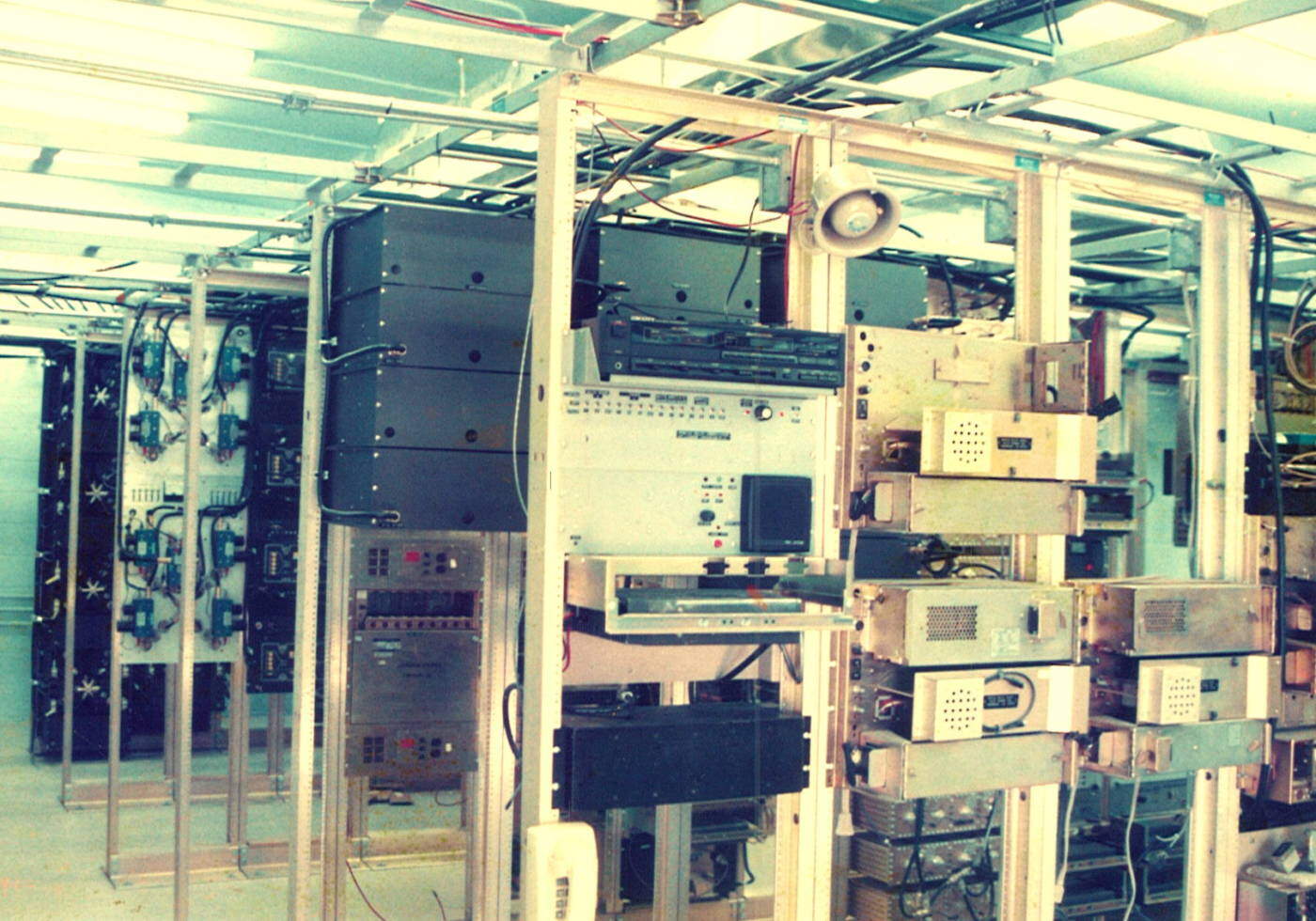
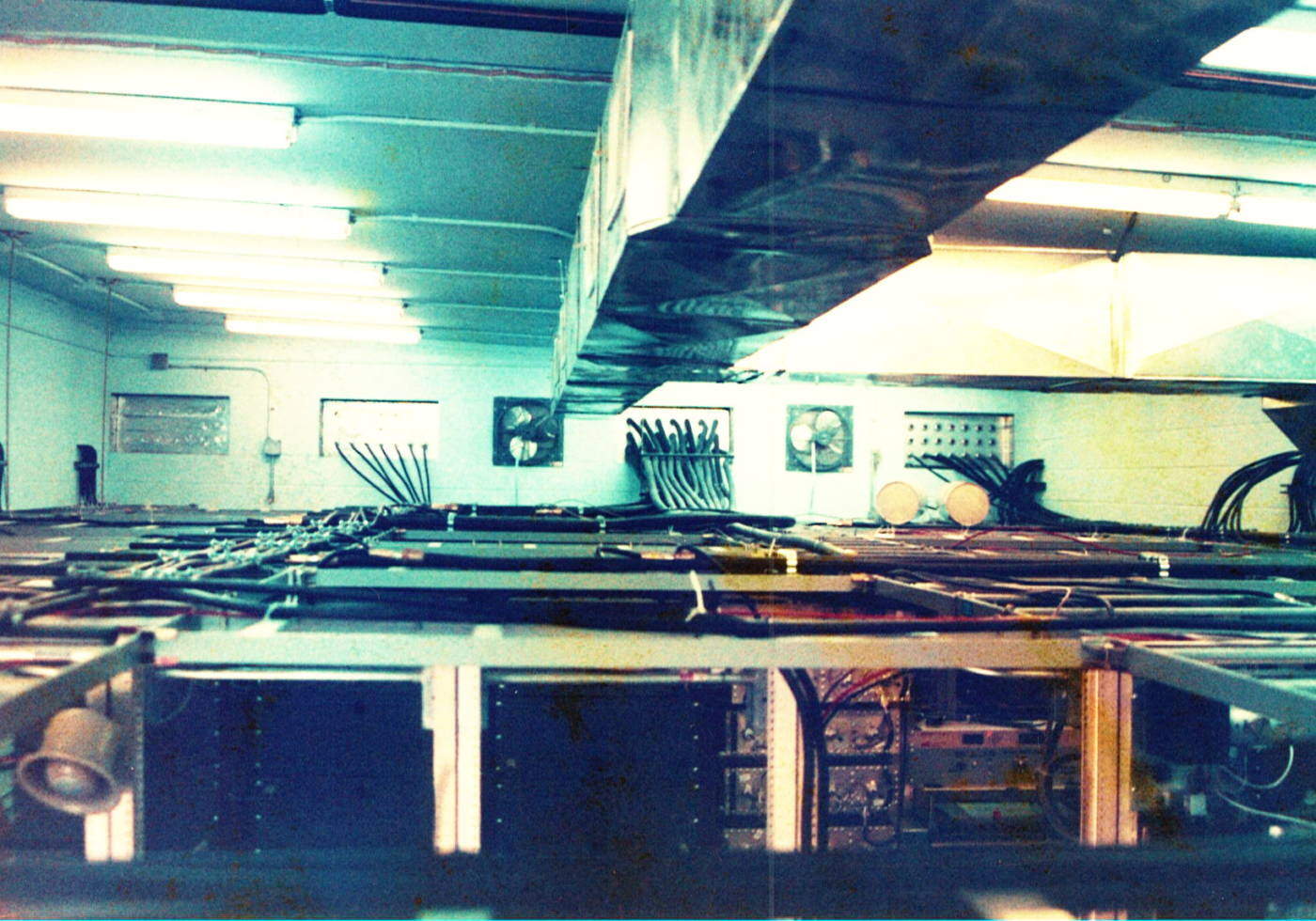
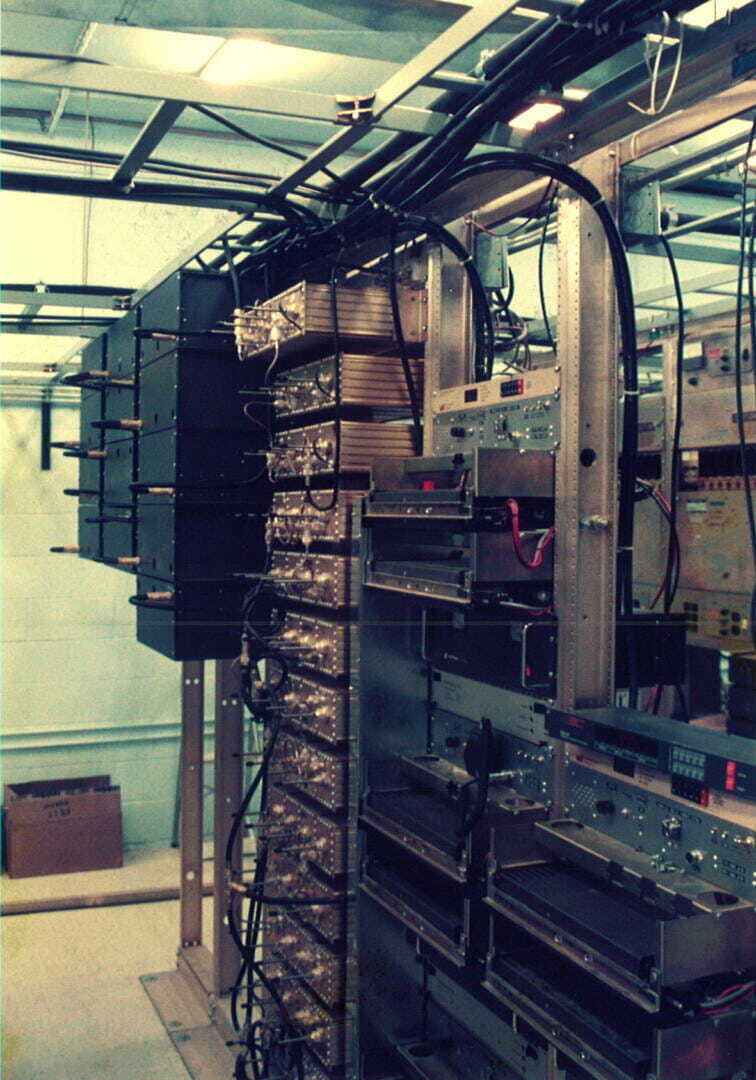
Now that the building interior was finished, we were able to proceed with the installation of the racks. Each row of racks was carefully positioned according to the plans which allowed for ample space between rows of racks to facilitate ease of servicing. Keeping the rows straight required following a “chalk line” which consisted of the
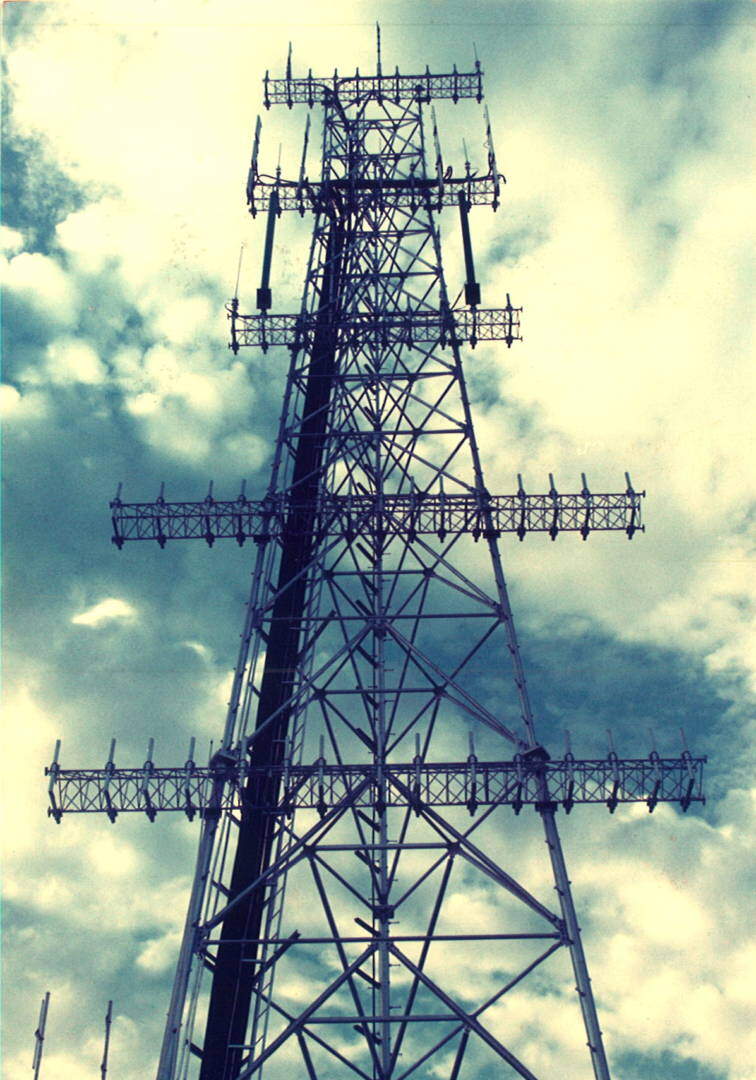
Now we had the time to continue working on the antenna systems on the tower. The main receive cable that we installed was 1 5/8” for our 800MHz master receive system (1 cable) to reduce signal loss. We installed 1 ¼” cable for all of the 800MHz transmit combiners (7 cables) for the same reason. These cables are large and difficult lift up the tower due to their significant weight, hard to bend, difficult to install the connectors and very
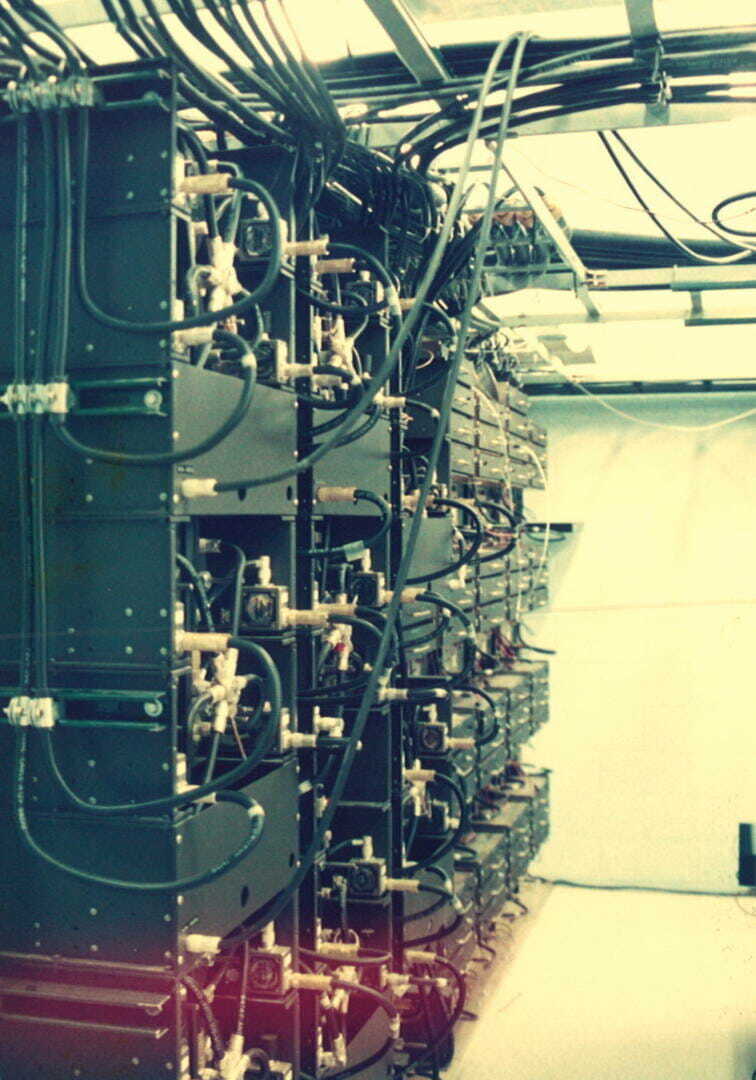
Installing the transmit combiners was a considerable amount of work which took many days to complete. However, we also needed to install the master receive system for the three different bands. The receive filters for 800MHz and 900MHz were relatively simple devices that took a small amount of effort to install. The receive distribution system for the two bands were custom ordered which took 10 weeks to get delivery of the filter. The receiver distribution had to be powered and installed which took a day to accomplish. The receive
Another item of the building that needed to be addressed was the battery systems. We had a room that was 14’ long by 6’ wide which was intended for batteries to keep the equipment working if we lost power in the building and the generator did not function. We installed the battery rack in the building which was a job for 3 people that took all day. Once the rack was in place, we brought the batteries up to the site and had to place them on the battery rack. The batteries that we had were used telephone company central station batteries which weighted 604 pounds for each cell in the battery system and there
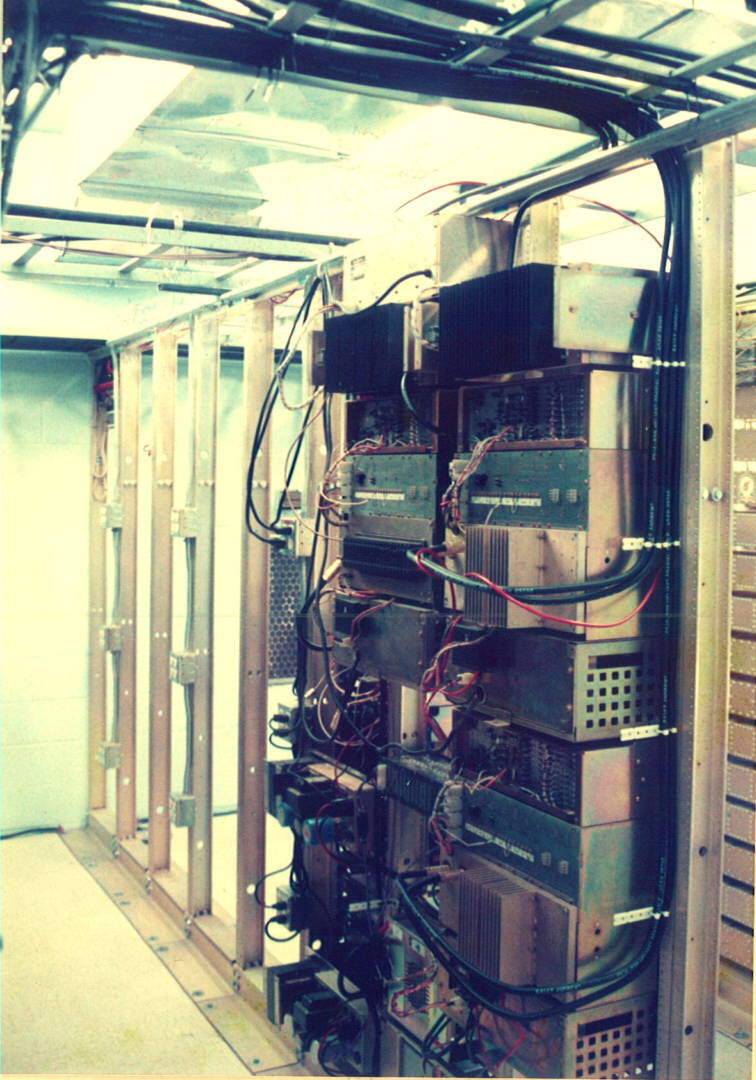
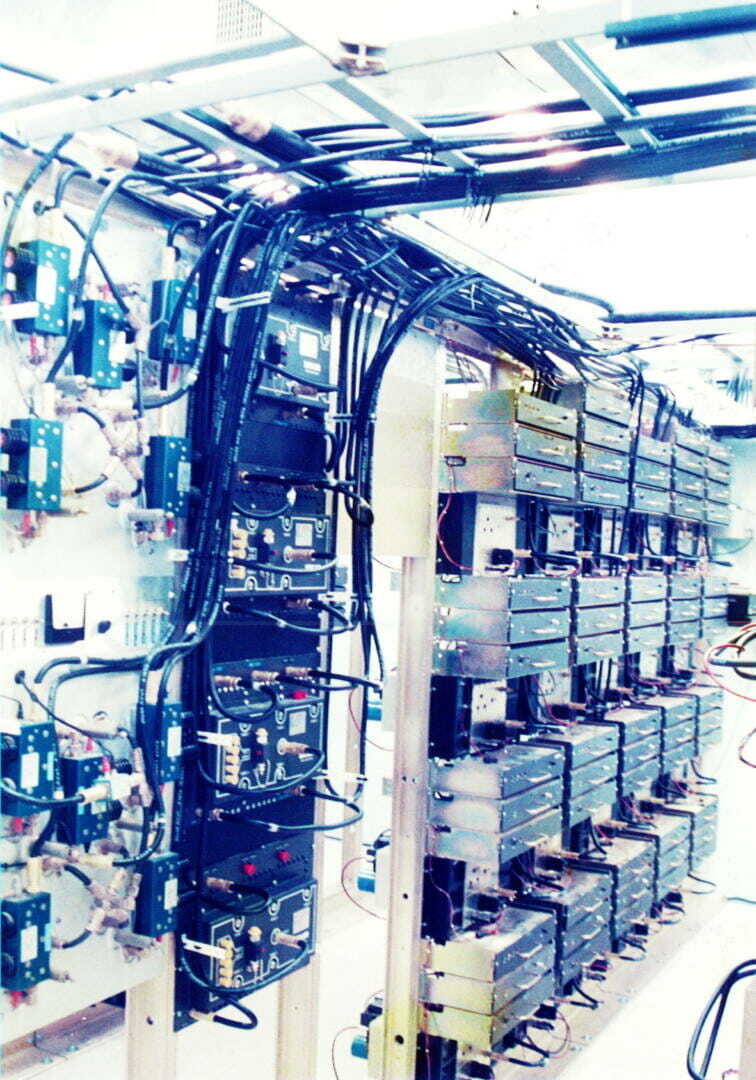
Once we had all of the above systems built and installed, it was time to start installing the new 900MHz equipment. This was the equipment that we did not want to install in the old building and then have to remove and reinstall once the building was finished. So we started installing the 900MHz repeaters in the new buildings while making the equipment look like a professional installation. We had 20 channels to install which took quite some time so we worked on it diligently until the job was done. Once that was finished, we needed to move our existing 800MHz equipment from the old building to our new building. The system was very busy and therefore, we could not move the equipment during the normal work day. In fact, the equipment was busy on Saturday and Sunday, but Sunday was the least busy day. So we notified the customers that the system would be off the air for the move and arranged with our people to be up on the mountain on a Sunday morning where we started moving the equipment around 10AM and had the entire move completed by 12PM (noon). Before we moved any piece of equipment, we made certain that it was properly labeled so that we could easily identify which repeater it was so that it could be installed in the new building in the least amount of time.
We now have completed the move of our 800MHz equipment, but we still had other equipment to move. We had some UHF repeaters and some customer owned VHF equipment. These repeaters had a far lower amount of usage, but the customers were still not happy about being off the air. So we moved this equipment before 8AM in the morning or after 5PM in the evening, so that the radio equipment was available to the users during the normal work day. Once the UHF repeater was moved and installed in the
Now there was time to relax and work a more normal schedule. We still had lots of new equipment to install in the building and get on the air, but the crash rush to make the move was over. We still needed to get the backup generator operational and we needed to finish wiring the battery systems to all the repeaters. We needed to clean up the wiring that was thrown in to get equipment on the air to facilitate the speedy move and we had low quality cables that needed to be replaced with more expensive high quality cables. In all, there was shortage of items that still needed to be addressed so we continued the work on the building for another two months on an almost daily basis until the work was done.
It is difficult to count up the thousands of hours of work that went into the design, engineering and construction of the building and the wiring of the many systems. The project took years to plan and month to build. The radio systems outperformed themselves by a substantial margin compared to our previous location on the mountain. It represented the single most profitable endeavor to date with our company, paying for itself in 2 years. Most buildings take 10-30 years to pay for themselves, so the project was a resounding success on all fronts.
Now it was time to take a break from our crazy schedule, fall back and regroup. Then it was time to work on the next tower site, radio system or customer need. Another day’s work and another project to build………………………