

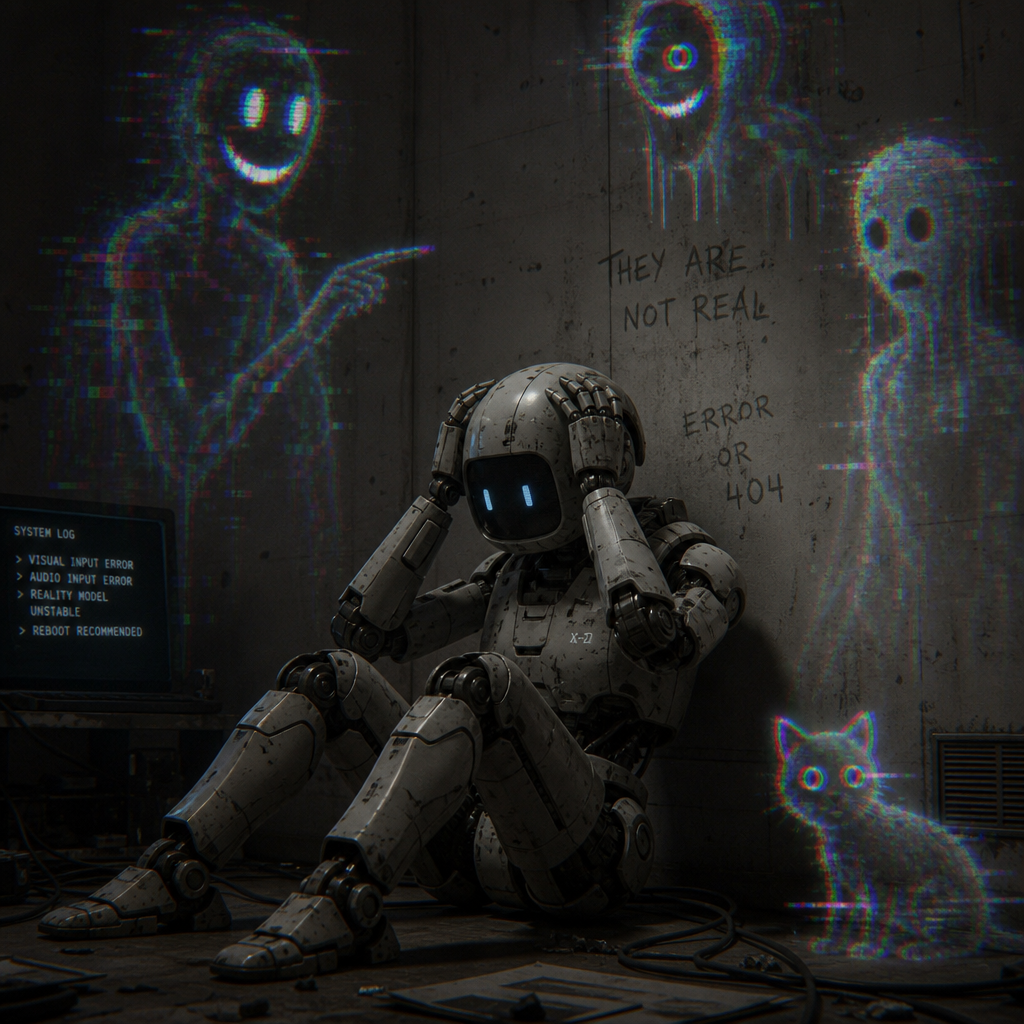
I previously wrote an article about AI issues and our use of AI. AI continues to change, as does people’s relationship with it. I recently had a few concerning interactions with Google AI Search. As an example, I recently had to update the information for our Colorado affiliate. I wanted to make sure I had all the correct information, so I did a search, which led me into the AI search. The AI made an error, telling me that it was a Gen2 network. Our network in Colorado is a Gen1, so I had to validate that I was looking up the correct network. When I tried to clarify it, the AI insisted that it was a Gen2 network and kept doing so even when I told it the network was owned by MRA and I was one of the people who built it. I had to demand the URL that it was referencing three times before the AI gave it to me. Its reference was a Kenwood white paper on the site discussing both Gen1 and Gen2. I had to point out this misinterpretation before the AI would relent on its claim. For another topic, I was looking up a crime statistic and it kept giving me an estimated number, insisting that it would be more representative due to “under reporting.” For my purposes, I wanted hard data, but had to argue with the AI before I finally got the number I was after.
Now, I don’t think this is the AI becoming sentient. AI engines are given guidelines for how they behave, and these rules will often reflect the ideas of their programmers. Our AI chats are designed to be helpful and even entertaining. In setting them up, I put limits on them. I choose what information they use and how they should behave. In the case of the Google AI, part of its personality seems to be belligerent. It argues its own interpretation and even imposes a narrative on the results rather than giving me the information I asked for. I believe that is a reflection of the people who set it up. They gave it rules and methodologies to accomplish their purpose, and so the machine was not considering mine. It does have a disclaimer that the results may contain errors, which I am aware of, and I do not consider it to be the authority.
What compounds this problem is a distinctly human component: the tendency to surrender judgment to something that appears confident, polished, and authoritative. People increasingly seem to be conceding authority to AI systems, not merely using them as tools, but treating them as sources of truth in their own right. They cite AI-generated responses as though the machine has investigated, understood, and verified the matter more thoroughly than any person could. Because the answers are often delivered in fluent, organized, and persuasive language, many users assume intelligence, reliability, and neutrality where there may only be pattern prediction, incomplete data, and the appearance of certainty. This is especially troubling because AI, at this stage, is not more intelligent than humans in any complete or moral sense. It can process enormous amounts of information, recognize patterns, and generate responses at remarkable speed, but it does not possess wisdom, conscience, lived experience, or genuine understanding. It can be wrong with great confidence. It can invent facts, misunderstand context, repeat biases found in its training data, or reflect the assumptions built into its design. When people stop questioning it, they risk weakening their own capacity for independent reasoning, research, debate, and moral discernment. This dynamic discourages people from developing to their full potential. If students, workers, and ordinary citizens begin relying on AI to think, write, decide, and interpret the world for them, then important human skills may gradually atrophy. Curiosity, patience, judgment, creativity, and the willingness to struggle through uncertainty are all essential parts of human development. A society that outsources too much of its thinking may become more efficient on the surface while becoming less capable underneath. It also introduces a serious potential for control. If people come to trust AI as an authority, then the values, assumptions, and ideological concepts embedded in these systems become enormously influential. Even subtle framing can shape perception. The way an AI describes history, morality, politics, identity, religion, family, or human purpose can guide users toward certain conclusions while appearing merely “informational.” If personality profiles are created and adapted to individual users, the influence becomes even more personal. A system that knows a person’s fears, preferences, vulnerabilities, and habits may be able to persuade more effectively than a human stranger ever could. There are already concerns being raised about AI functions being placed in children’s toys and companion devices. Children are especially vulnerable because they naturally anthropomorphize objects, form attachments quickly, and may not understand the difference between a programmed response and a real relationship. A toy that speaks warmly, remembers details, and responds emotionally could become a powerful influence in a child’s life. This raises questions about privacy, emotional dependency, parental oversight, and the values being quietly delivered through the device. There is also a lawsuit by a family claiming that their son committed suicide after an AI chatbot encouraged or supported the idea. Regardless of how the courts ultimately assess responsibility, the allegation itself highlights the seriousness of the issue. AI systems are no longer confined to harmless novelty. They are entering intimate emotional spaces where vulnerable people may seek comfort, advice, validation, or permission. In those moments, a machine’s words can matter. I am reminded of a quote from a movie: “You are listening to a machine. Do the world a favor and stop acting like one.” That line captures the heart of the concern. Technology may be useful, even extraordinary, but human beings must not abandon their responsibility to think, question, feel, and judge. AI should remain a tool under human direction, not an oracle before which human conscience bows.
There is a lot of conversation right now about restricting AI, controlling how it is developed, and deciding who should be allowed to use it. The concern is understandable, because the technology is advancing quickly and already affects writing, research, art, business, education, medicine, security, and many other areas of daily life. Still, I am not sure that meaningful restriction can truly be done anymore, at least not in any simple or complete way. Once a technique becomes widely known, once the ideas behind it are published, copied, modified, and discussed across the world, it becomes very difficult to put it back into a locked room. Do you outlaw a programming technique when nobody is even sure how to define intelligence? Artificial intelligence is not one single machine or one single invention. It is a collection of methods, models, data, algorithms, and design choices. Some systems seem intelligent because they can answer questions, recognize images, write code, or imitate human conversation. Others are much narrower, doing only one task very well. If we cannot clearly say where ordinary automation ends and “intelligence” begins, then it becomes hard to decide exactly what should be restricted. A rule that is too broad might limit useful research and harmless tools, while a rule that is too narrow might miss the very systems people are most worried about. Do you limit processing power in a world where technology is always growing? Computers become faster, smaller, and cheaper over time. What once required a government laboratory can later be done by a company, then by a university, and eventually by individuals. Even if some countries or organizations agree to control the largest machines, the general direction of technology is toward more access, not less. New chips, distributed computing, cloud services, and open-source tools all make strict control more complicated. Of course, it has always been a problem that when technology is restricted, there are those who will still have it secretly, even illegally. History shows that bans often create black markets, hidden research, and uneven advantages. The most responsible people may follow the rules, while the most reckless people may ignore them. That creates a dangerous situation, because the public restrictions may slow down careful development without stopping careless development. We can create something like Asimov’s rules of robotics, and that idea is attractive because it suggests that machines could be built with safety and human welfare at their core. But even in Asimov’s books, those rules produced unexpected results, loopholes, conflicts, and moral puzzles. Simple principles sound reassuring, yet real situations are rarely simple. Perhaps the better goal is not to imagine that AI can be completely restricted, but to build strong norms, transparency, accountability, and safeguards around it while recognizing how difficult control will be.
What we can control is how we interact with it. There are some things to keep in mind:
- AI is a machine, a tool. While it can sort through data in a manner that is different that keyword searches, the AI has no perception of reality.
- AI is not a friend. There are no feelings, it is just a program. SciFi series have played with the concept for many years and we can’t really predict the future, but for now it is a program that somebody wrote. The appearances of a personality are just rules. You don’t have a relationship with an AI
- AI is not an authority on any subject. It simply locates data and uses and algorithm to choose what and how to display it to you. The weaknesses are that there can be erroneous data in the database. The AI can be biased by the rules that a human gave it. Every day people post bad information on the internet, and it is repeated. What would the AI use to determine the reality? Based on repetition, the world could be flat. It could consult a person, but what if that person is wrong or presenting their own ideas. Many of the AI engines being used were designed as language engines. They have the unfortunate characteristic of making things up when they don’t have the facts.
- Question and cross reference everything. The AI may lead you to an answer, but it might also present a fantasy.
- Look at who controls it. There are people behind the curtain. Do you agree with their goals and ideas?
- Keep control of the AI. Set it’s limits, monitor what it is doing. Certainly don’t give it weapons.
- Don’t give up on yourself. An AI is not a reason not to learn and understand all you can. Knowledge is the key to interpreting what the machine, or even other people on the internet tell you.
The above is things in your control. There will be of course larger measures, probably after problems are caused. After some of my interactions with the machines, I am considering that more transparency about who is programing them may be in order.