
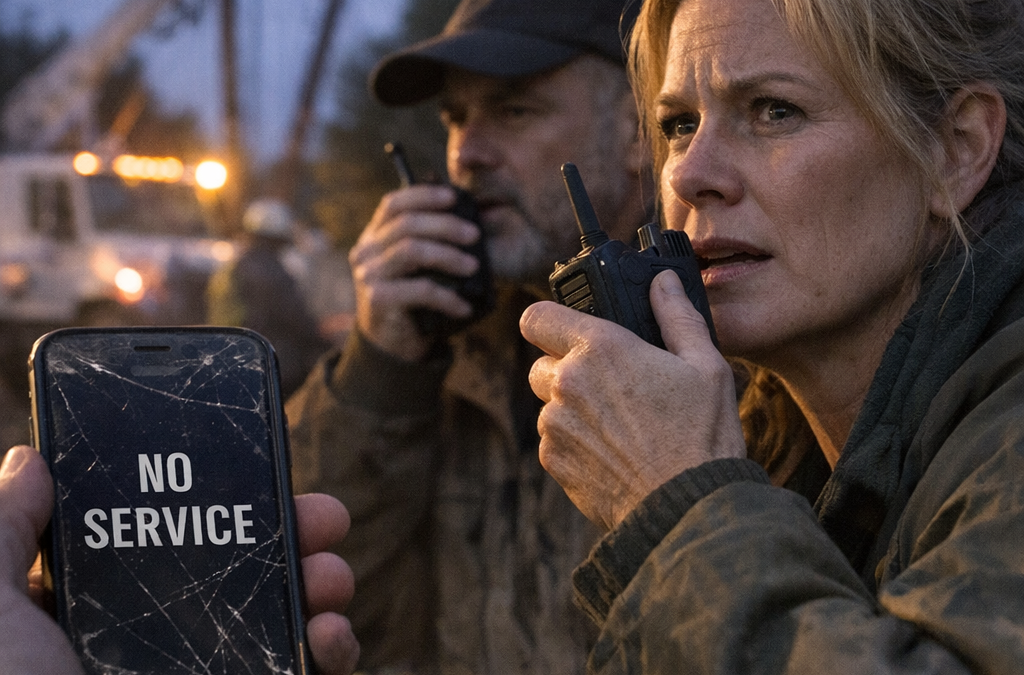
On January 14, 2026, a widespread Verizon service disruption reminded many people—families, businesses, and public agencies alike—how quickly modern life can be thrown off balance when cellular networks go down. Beyond the inconvenience of dropped calls and stalled text messages, outages can interrupt access to basic services, including authentication codes, dispatch systems, and time-sensitive coordination. One of the consistent things about our modern infrastructure is that the unexpected still happens. This has happened in the past with AT&T as well.
Verizon Outage Jan 14, 2026: What Happened
Reports from customers across multiple regions described an abrupt loss of service that affected core functions: voice calling, SMS, and mobile data connectivity. For many users, phones showed “SOS”, “no service” or persistent network searching, while others could connect intermittently but experienced failed calls and delayed messages. The impact extended beyond casual communication—people noted problems receiving one-time passcodes for banking and workplace logins, and some businesses reported point-of-sale slowdowns where cellular backup links were relied upon.
As with many large-scale telecom incidents, the disruption appeared uneven: some areas were hit harder than others, and certain customers regained partial service sooner. In documentary terms, that patchwork effect is typical of complex cellular systems built from layers—local towers, regional backhaul transport, routing cores, and authentication platforms. When a failure or misconfiguration occurs in any of those layers, the result can look “random” to end users even though the root cause may be centralized.
Verizon’s incident response—what customers see as “restoration”—generally involves stabilization first (stopping the bleeding), then incremental recovery as systems rebalance and traffic reroutes. During high-demand periods, outages can cascade: people repeatedly retry calls and refresh apps, adding load at the exact moment the network is least able to handle it. The Jan 14, 2026 outage underscored a simple operational reality: even highly redundant national carriers can experience interruptions, and the public often has limited visibility into timelines and technical specifics while work is underway.
Why Two-Way Radio Backups Matter During Outages
Two-way radio is valuable in outages because it is not dependent on the cellular network’s towers, SIM authentication, or carrier core services. A handheld radio-to-radio conversation (simplex) can work with no internet, no carrier account, and no functioning phone network—just charged batteries and compatible equipment. That independence is why radios remain a staple in event management, construction, security teams, and emergency response, even in cities with otherwise excellent mobile coverage.
Our Southern California NexEdge network operates independently of conventional cellular networks, providing dependable coverage even when cell phone service is disrupted. During the recent outage, our network remained fully operational and unaffected.
In practical terms, radios also reduce coordination friction when time matters. Push-to-talk communication is immediate and often group-oriented by default: one message can reach an entire team channel without creating group texts, waiting for delivery, or dealing with congested networks. During a carrier outage, that speed becomes more than convenience—it becomes a safety and continuity tool, especially for operations that rely on quick status updates, location confirmation, or basic “are you okay?” checks.
A realistic backup plan usually mixes tools rather than replacing phones entirely. Many households and organizations keep at least one set of two-way radios (such as FRS, GMRS, ham or commercial-band systems) alongside spare battery packs, car chargers, and printed contact trees. The lesson from Jan 14, 2026 is not that cellular is unreliable day-to-day—most of the time it works extremely well—but that single-channel dependence is fragile. Radios provide a high-resilience layer that can keep essential communication moving when the modern stack goes quiet.
The Verizon outage on Jan 14, 2026 served as a public reminder that communications infrastructure—no matter how advanced—can fail in ways that feel sudden and widespread. When that happens, the people and organizations who fare best are the ones with alternatives that don’t share the same points of failure. Two-way radio, with its independence from carrier networks and its fast group communication style, remains one of the most practical backups to keep plans, teams, and families connected when phones can’t.